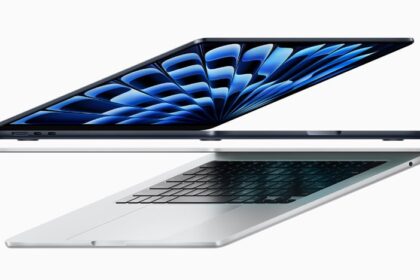



The Mac is not only an integral part of Apple’s ecosystem today, but it’s also the longest running product in the company’s history, dating back to 1984. In fact, the Macintosh existed before Apple even had an ecosystem of different products. And that puts it in a unique position today.
Compared to more recent releases like the Apple Watch, iPad, and iPhone, the Mac uses an entirely different type of technology, a mouse and keyboard, instead of a touch screen. This has caused many people to wonder whether or not Apple would eventually add a touch screen to the Mac, and therefore make its operating system touch based like on every other product they offer. For years, since reporters and customers have been asking this question, Apple remained adamant that a multi-touch Mac doesn’t make sense.
Apple’s Official Stance on Touch Screens
Let’s start off with the official reason Apple gave as to why they haven’t included touch screens in the Mac. Apple’s Senior Vice President of Software Engineering was asked this question directly back in 2018, and he gave a pretty direct answer. Federighi said, "…we really feel that the ergonomics of using a Mac are that your hands are rested on a surface, and that lifting your arm up to poke a screen is pretty fatiguing. I don’t think we’ve looked at any of the other guys to date and said, how fast can we get there?" So according to Apple, the biggest hurdle to a touchscreen computer comes down to a simple matter of comfort. And it makes sense.

Products with displays that are used horizontally, like iPhones and iPads, feel very natural to tap. But computer displays are almost always used vertically, so hovering your arm to interact with elements on the screen would quickly become uncomfortable. Just take a look at existing PC notebooks on the market today. Almost every model over $1,000 has a touchscreen. But what percentage of users actually use them?
If you browse internet forums, you might come across people saying things like this, generally I don’t use it. I have two Chromebooks, I just have it on as a gimmick. On my laptop, it’s just annoying. I didn’t want a touchscreen, my laptop was a good deal and just happened to have one. Things like these can be heard over and over from users, with some people not even realizing their notebook had a touchscreen in the first place.
The Touch Bar Experiment
So Apple took an entirely different approach to touch on the Mac with the Touch Bar in 2016. It was an OLED display strip that replaced the computer’s row of function keys. According to Apple, it would allow users to use their Mac in ways never before possible. With each application, a new interface would be displayed on the Touch Bar, allowing for greater flexibility and capability than physical function keys.
But things didn’t quite pan out the way Apple expected. Applications didn’t utilize the Touch Bar to its fullest potential, keyboard shortcuts were often faster to execute, and many pro users hated the virtual escape key. So Apple tried satisfying users by reintroducing the physical escape key in 2019 with the 16-inch MacBook Pro. In 2021, Apple removed the Touch Bar entirely from higher-end MacBook Pro models, switching back to full-size physical function keys. The 13-inch MacBook Pro remained as the last model with a Touch Bar until October 2023, when Apple discontinued that model entirely. The Touch Bar is now fully discontinued on all new MacBooks sold by Apple. So it turns out that there’s a lot more to perfecting touch on the Mac than adding a horizontal display strip.
Signs of Change
Despite Apple’s previous resistance, several developments have suggested a shift in the company’s thinking. In 2020, macOS Big Sur introduced a redesigned user interface with larger icons and more space between clickable elements—changes that appeared to prepare the system for potential touch integration. And while this may sound far-fetched, consider the fact that Apple has technically already broken their own rule regarding vertical touch screens.
When they introduced the Magic Keyboard for iPad in 2020, it completely redefined the notebook experience. Suddenly your iPad had a round cursor that could be controlled using a trackpad that also supported swipe gestures. It was the first time Apple really blurred the boundary between tablet and notebook. And I don’t think it’s something we should overlook. Apple built a notebook experience optimized for a touch-based operating system. Which is something Microsoft has been trying to do for years with varying degrees of success. If Apple wanted, they could easily bring that same functionality to the MacBook. Although there are different ways of going about it.
Apple’s Patent Explorations
Apple has filed many different patents regarding touch integration on the Mac, but two in particular have gained traction over the years. First, a patent that utilizes your iPhone or iPad as a touch display, rather than the one on your Mac. It’d be more ergonomic since they’re horizontal displays, but they’re also large enough to provide a more immersive touch experience than simple buttons or controls. In fact, many have wondered if this patent would allow an iPad to become a sort of wake-up screen tablet for the Mac, providing a wireless drawing experience unlike anything available on a Mac before.
And while the Touch Bar wasn’t a fan favorite, a physical keyboard with displays in each key may be received differently. This patent describes a physical keyboard with force-touch technology and small displays built into each keycap, allowing users to reconfigure each key to their liking or different layouts for various applications, like programming, video editing, or essay writing.
The Changing Customer Expectations
Apple was able to bring touch to the iPod, which initially had a click wheel interface, the iPhone, iPad, and Apple Watch. The technology has become so ubiquitous that customers have come to expect it from every Apple product that has a display. I’ve actually experienced this myself while in Best Buy. A customer approached a MacBook Air and tried tapping on the display, only to realize it doesn’t work. She said, wow, they want to charge that much and not even have a touch screen? And I’m afraid that sentiment will only become more and more common as users transition from mobile devices to the Mac.
Because keep in mind, while the Macintosh was one of Apple’s earliest products, it isn’t necessarily the first Apple product customers buy today. iPads and iPhones make up the vast majority of product sales, and that means most people are first exposed to Apple’s ecosystem through touch-based mobile devices, and then find themselves shopping for an Apple computer, only to be disappointed that it doesn’t deliver the multi-touch experience they’ve come to expect.
Apple’s Confirmed Plans for 2026
In a major reversal of its long-standing position, Apple is now confirmed to be developing its first touchscreen MacBook Pro, expected to launch between late 2026 and early 2027. According to multiple reliable sources including Bloomberg’s Mark Gurman and analyst Ming-Chi Kuo, the redesigned MacBook Pro will feature an OLED display with integrated touch functionality using on-cell touch technology.
The upcoming models will represent the most significant MacBook Pro redesign since 2021, featuring a thinner and lighter chassis, a hole-punch camera design replacing the current notch, and reinforced hinge hardware to prevent the display from flexing when touched. These models will be powered by Apple’s next-generation M6 chips, following the M5 generation expected in early 2026.
Apple’s decision to finally embrace touchscreen technology on the Mac appears to reflect the company’s long-term observation of iPad user behavior, indicating that in certain scenarios, touch controls can enhance both productivity and the overall user experience. Importantly, the MacBook Pro will continue to feature a trackpad and keyboard, with touch serving as an augmented input method rather than a replacement for traditional controls.
This development marks a significant shift from Craig Federighi’s 2018 stance on touchscreen Macs. While Apple previously dismissed touchscreen laptops as "experiments" that created ergonomic challenges, the company has apparently found ways to address these concerns through careful engineering and design choices.
The Future of Touch on Mac
So one way or another, Apple has decided to implement touch on the Mac, in a way that aims to enhance the user experience without causing the arm fatigue that executives previously cited as a dealbreaker. Whether this implementation proves successful—unlike the Touch Bar—remains to be seen. But for the first time since the Mac’s creation in 1984, users will soon be able to interact with their Mac’s display directly, bringing the product line in line with the rest of Apple’s touch-enabled ecosystem.