





Although Apple has baked a new and more advanced CPU scheduler into this year’s operating systems, the company also worked to bring it to older iPhone models — all the way back to the iPhone 11. That was the same cutoff point for iOS 26, so if your iPhone is running last year’s release, you’ll be getting this year’s also.
However, that doesn’t mean you’ll be getting everything that iOS 27 has to offer. Apple Intelligence features remain the exclusive domain of Apple’s iPhone 15 Pro and newer models, and while all these devices will still be eligible for most of the new AI features, Apple is raising the bar to another level for some of the most demanding new features.
Apple’s "most powerful on-device model", known officially as Apple Foundation Models (AFM) Core Advanced, is limited to specific Apple Products.
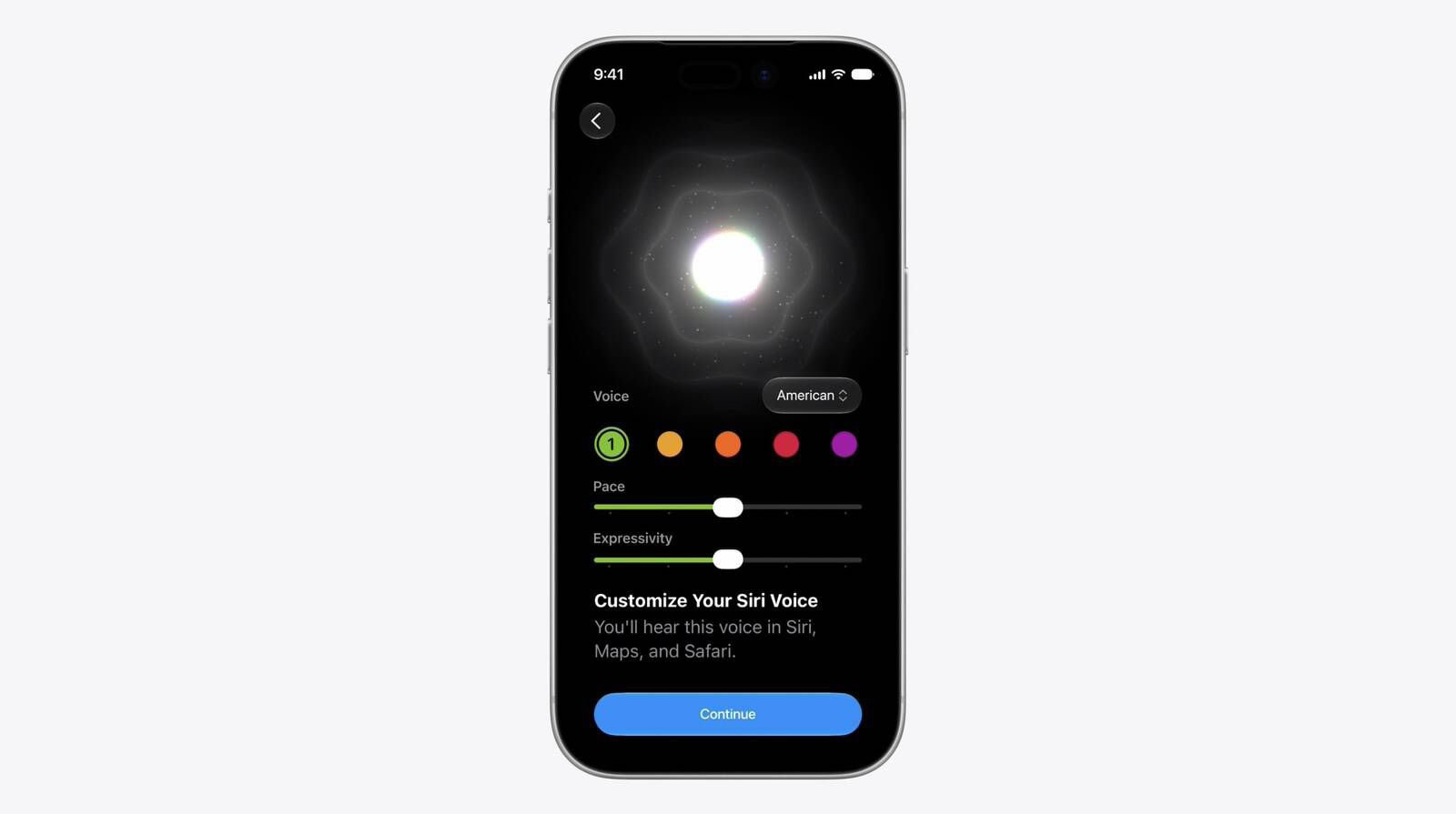
According to Apple’s press release on Siri AI, the two features exclusive to AFM Core Advanced are voice customization and more advanced systemwide dictation.
The former gives you the ability to customize the expressiveness and pace of Siri’s voice — anyone with access to Siri AI can still choose from a set number of Siri voices, but you’ll need a compatible iPhone, iPad, Mac, or Vision Pro to make Siri speak faster, slower, and with more or less enthusiasm.
The second feature — more advanced systemwide dictation — is arguably the more significant. It essentially means those top-end Apple devices are more effective at converting speech into accurate text than older or less advanced Apple devices. This updated dictation engine "automatically handles capitalization, punctuation, and formatting as [you] speak," Apple says, meaning you can "speak naturally and trust that [your] words will appear clearly, accurately, and as intended".
Here are all the Apple products that supports b Expressive Siri Voices and Advanced Dictation feature
Available on iPhone 17 Pro, iPhone 17 Pro Max, iPhone Air, iPad models with M4 and later and at least 12GB of unified memory, Mac models with M3 and later and at least 12GB of unified memory, and Apple Vision Pro (M5).
In other words, even if your device can run iOS 27, iPadOS 27, macOS 27 Golden Gate, or visionOS 27 and the new Siri AI, that doesn’t necessarily mean you’ll have access to Siri’s voice customization and systemwide dictation accuracy features
To be clear, this doesn’t mean that if you own, say, an iPhone 15 Pro, your Siri will be incapable of converting speech into text. Yes, Siri has been awful at doing just that in the past — anyone who’s tried to send a message using CarPlay will know what I’m talking about — but my understanding is that Siri AI, in being an entirely new version of Siri, will bring improved dictation at a foundational level (i.e. to all compatible iPhones).
But for those who rely on dictation to send messages or navigate their iPhone hands-free, the difference in dictation capabilities between the best iPhones and older models may be more consequential.
This means, then, owners of the iPhone 17 Pro, iPhone 17 Pro Max, and iPhone Air are simply getting a more customizable Siri, and one more capable of converting speech into text.
That’s not ideal for iPhone 16 Pro or iPhone 17 users who thought they were buying a phone “built for Apple Intelligence” — lawyers at the ready! — but these iPhones are capable of running all the Apple Intelligence features revealed at the software’s announcement in 2024 (so, actually, put down your pitchforks).
Since the “most powerful on-device model” is undoubtedly more memory hungry, it’s not hard to surmise that the baseline here isn’t so much the SoC itself as the RAM — especially since Apple calls that out so explicitly for the iPad and Mac. It also explains why the iPhone 17 is missing from the list and why the iPad requires an M4 while the Mac can get by with an M3 — as long as it has 12 GB of RAM.
While Apple offers multiple RAM configurations for most of its Macs (the notable exception being the year’s MacBook Neo, which comes in a single 8 GB configuration), the iPhone and the iPad use fixed RAM configurations based on the A-series or M-series chip inside — and the M3 iPad Air and base A19 chip still pack in only 8 GB of unified memory.
The A19 Pro was the first iPhone chip to get a bump to 12 GB, while the M4 iPads had a slightly weirder journey. When Apple debuted its first M4-powered iPad Pro models in early 2024, it split the RAM configurations based on storage capacity — the 256 GB and 512 GB models only had 8 GB of RAM, while the 1 TB and 2 TB versions got a bump all the way to 16 GB. When Apple brought the M4 chip to the iPad Air earlier this year, it split the difference, giving it 12 GB across the board.
In practical terms, this means you won’t be getting the flagship Apple Intelligence features in iPadOS 27 unless you opted for at least a 1 TB M4 iPad Pro or picked up this year’s M4 iPad Air.
In some ways, this echoes the 2024 debut of Apple Intelligence, when it was limited to the iPhone 15 Pro and iPhone 15 Pro Max, conspicuously leaving out the standard iPhone 15 models. Many speculated at the time that this was mostly about RAM — the A17 Pro was the first iPhone chip to get 8 GB of RAM, while the A16 Bionic in the iPhone 15 and iPhone 15 Plus packed in only 6 GB. However, Apple Intelligence did — and still does — run on a 2020-era M1 MacBook Air, which has a Neural Engine that operates at only 11 trillion operations per second (TOPS), compared to the A16 chip’s 17 TOPS. By that metric, the A16 should have been more than capable of handling Apple Intelligence in terms of raw processing power — but it lacked the RAM necessary for the large language models to breathe.
See also: Which iPhones Have 12GB of RAM? iOS 27 Siri AI Requirement
The same now applies to Apple’s new on-device Foundation Model. More advanced dictation and an expressive and conversational Siri naturally requires additional breathing room, and 8 GB just doesn’t cut it anymore.







.)