




- An average iPhone can last four to seven years, but the battery is usually the first to have issues.
- Unlike laptops and desktops, iPhones have smaller parts that wear out quicker and are harder to replace.
- You can extend an iPhone’s lifespan by monitoring its performance and upgrading parts when possible.
Within the past few years, iPhones have overtaken laptops and desktops to become the most common type of computer for education, business, and personal use. This is great for portability but can cost more — not only do iPhones tend to be more expensive, but they also don’t last as long as some laptop and desktop computers. This is largely due to the smaller components that are exposed to more direct heat and physical contact, and are costlier to repair or replace.
Here’s how to tell how long your iPhone might last, including the warning signs to look out for.
How long do iPhones last?
The lifespan of an iPhone differs greatly depending on the quality of its materials. But in general, you should expect an average iPhone to last four to seven years, assuming it’s not mishandled or outright damaged first. Most users continue utilizing their iPhones for three to four years before upgrading to a new model, and with battery replacements, this timeline can extend to as much as five to ten years. iPhone models tend to become outdated based on software support timelines rather than hardware failure since graphical and computational demands progress faster than other hardware requirements.
As with most products, the more an iPhone costs, the sturdier its parts tend to be. Expect less expensive iPhone models to wear out faster than more premium ones. But even the most expensive iPhone has its weaknesses, especially if it’s put to constant work.
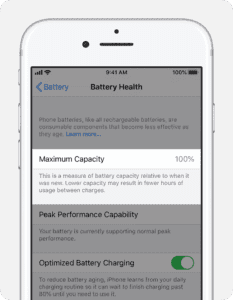
The first component to wear out on an iPhone will typically be the battery, which is referred to as the device’s "Achilles’ heel." Unlike some issues, it’s impossible to prevent your battery from gradually decaying, no matter what kind of iPhone you have. After the first year of use, your iPhone’s battery health is generally still in good condition, often retaining 85% to 95% of its original capacity, and after two years, your iPhone’s battery will likely retain 80% to 85% of its original capacity. Apple officially states that iPhone batteries are "designed to retain up to 80% of original capacity at 500 complete charge cycles when operating under normal conditions."
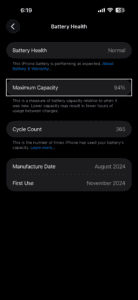
As an iPhone battery begins to lose charge over time, you may need to plug it in more often. The next most likely parts to degrade are the display, where pixels can black out or become discolored, and the thermal management system, which handles heat dissipation during intensive processing.
And if you keep your iPhone around for long enough — going on seven to ten years — modern software will eventually stop supporting its hardware or operating system. By that point, you can rest easy knowing that you’ve gotten your money’s worth.
Does an iPhone last longer than an Android smartphone?
Many people claim that iPhones last longer than Android smartphones. But analysis reveals this is not entirely a misconception, though the reasons are more nuanced.
Entry-level iPhones are priced higher than lowest-end Android smartphones, which in turn deliver greater longevity due to their higher-quality components. Although you can expect to get more use out of a budget iPhone than a budget Android phone, this is only because Apple doesn’t sell an iPhone cheaper than $599, so the quality of the lowest-end iPhone is much higher than the lowest-end Android phone which are lower priced. This skews the average iPhone longevity to be longer, according to device durability experts.
In other words, high end iPhones and premium Android phones sold at the same price point should last an equal amount of time before needing repair.
Signs that your iPhone is wearing out
As iPhones age, they tend to wear out in a few common ways.
It can’t keep a charge
Every time you charge your iPhone, the battery slowly loses its effectiveness. The less effective a battery is, the less charge it can hold, which means it’ll die quicker. It’s an unavoidable issue and begins as soon as you plug in your charger for the first time. After three years, the battery’s health is expected to drop to 75% to 80%, and this is when you’ll start to see the effects more clearly, with the need for frequent charging becoming a common annoyance.
Eventually, you may reach a point where your iPhone can only last an hour or so without its charger. At its worst, your iPhone might not even be able to turn on without the charger, and unplugging it will cause an immediate shutdown.
It heats up drastically
If your iPhone is reaching extreme temperatures, it’s a sign that something’s wrong with the thermal management system. iPhones are designed to operate in ambient temperatures between 0º and 35º C (32º to 95º F). The CPU’s thermal management might be compromised, or internal components may be deteriorating. iPhones naturally throttle, or slow down performance, when they hit high enough temperatures — this is a safety measure to avoid permanent heat damage. And if the heat lasts for too long, your iPhone might even shut down without warning, displaying a temperature warning screen.
In some cases, sluggish performance may signal something is wrong with your device’s RAM. But this is much rarer than issues with thermal management, which naturally hits high temperatures while running and needs constant internal heat dissipation. If your RAM is the issue, it’s probably because you don’t have enough — at this point, 8GB should be considered the minimum amount needed for decent iPhone performance.
It starts running slowly or shuts down randomly
When an iPhone overheats, its performance takes an immediate toll. Most iPhones are designed to automatically "throttle" or slow down when they hit high enough temperatures — this is a safety measure to avoid permanent heat damage. And if the heat lasts for too long, your iPhone might even shut down without warning.
The display is discolored, keeps flickering, or has dead pixels
Even if you keep it clean and avoid damage, the average iPhone screen won’t last forever. Dead pixels are exactly what they sound like: Individual pixels on the screen that lose the ability to display colors. They’ll usually look like tiny black specks. If they’re any other color, it might mean they’re stuck rather than dead and may eventually work again.
"Yellowing" is a common term among device technicians for various color issues that crop up as the display ages, particularly on OLED screens where blue subpixels degrade faster than red and green subpixels. This natural color shift causes displays to appear warmer over time.
And if your screen is flickering, it could signal an issue with either the iPhone’s display controller or the internal ribbon cables that connect the display to the logic board.
It’s too expensive to repair
Aging iPhones often come with a recurring cost in the form of repairs and upgrades. Whether it’s a cracked screen, a broken speaker, or broken Camera, you’ll pay to keep your iPhone running. Like an aging device, at a certain point, it’ll be smart to retire the old model and save money over the long haul by buying a new one. Battery replacement costs range from $69 to $119 depending on the model, while screen repairs cost $129 to $379.
Repair specialists say that most people they’ve worked with don’t want to spend more than 30% of the iPhone’s current resale price on repairs. The exact percentage will depend on your specific situation.
How to make your iPhone last longer
Nothing lasts forever. But if you treat your iPhone well, it can last an incredibly long time.
The best way to keep your iPhone working is to simply keep it clean and away from anything that could damage it. Don’t spill water on it or drop it, keep it out of extremely hot or cold environments, don’t block the speaker vents while you’re using it, and try to keep the screen, charging port, and buttons clean. Even if it’s been a while, it’s not hard to clean a dirty iPhone.
If your iPhone is already wearing out, you’ve still got a lot of options. If your device is under warranty, contact Apple; if your battery health drops below 80% within the first year of warranty coverage, Apple will replace the battery under warranty at no charge. And your local repair shop can almost certainly handle the most common iPhone issues.
But if you’re looking to save some cash, you should also look into repairing your iPhone yourself. Although some iPhones are prohibitively difficult to tinker with, many — if not most — are built in a way that even a regular person could understand.
"Most people are afraid to even look inside their devices," according to device repair experts. This fear, often called "fix-o-phobia," is surmountable by starting with simple repairs.
The easiest part to replace in iPhones is the battery. Although every iPhone has a unique battery design, it’s rarely hard to find a replacement online. And replacing it is just a matter of using the proper opening tools, safely detaching the internal battery connections, and swapping in the new one. Apple now offers self-service repair kits for many iPhone models, making battery replacement accessible to technically proficient users.
Anything in your iPhone that’s not soldered in can probably be replaced. Repair specialists at iFixit offer guides on how to repair hundreds of different iPhone models, along with the tools you might need — it’s a worthwhile resource to check out if you want to keep your iPhone alive but avoid breaking the bank. Modern iPhones have improved repairability through software-assisted calibration systems that allow third-party repairs to maintain full functionality.