


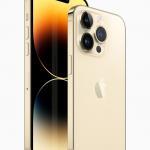


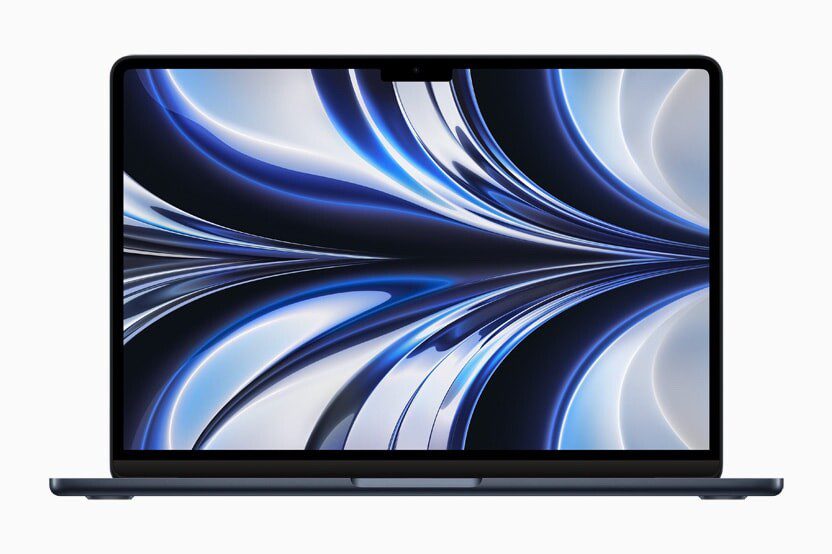
Apple replaced Touch ID on iPhones with Face ID back in 2017. But MacBooks never received the feature. Which is surprising, since their notch is even bigger than the iPhone’s. So why hasn’t Apple used that space to include Face ID?
Well, there are a couple reasons why. First is that while it may seem like the MacBook’s notch has a lot of space, that’s not really true. While its width and height is quite large, its depth is not. At just three millimeters thin, a MacBook’s display assembly has less than half the depth of an iPhone, which measures around 7.8 millimeters.
This thickness is crucial, since it can accommodate components like higher quality camera lenses, infrared cameras, and a dot projector. Which are all necessary to power Face ID. These components simply don’t fit in a three millimeter enclosure. That’s why your MacBook takes such blurry photos. Apple can’t fit in a large camera lens that captures high quality images like on iPhone.

Apple has two options. Make the MacBook’s display assembly about twice as thick to accommodate all the necessary Face ID components. Or simply leave the feature out. Relying instead on Touch ID. Which is not only cheaper to include, but could actually be more useful.
Apple made this argument themselves back in 2021. They were asked why MacBooks didn’t have Face ID, and instead of mentioning technical limitations, Tom Boger, Apple’s Vice President of Mac and iPad Product Marketing, said Touch ID is more convenient on a laptop, since your hands are already on the keyboard. And while that sounds reasonable, it doesn’t really make sense.
A Face ID scan could be confirmed by pressing a key. Kind of like how Face ID works with Apple Pay on your iPhone. It automatically scans your face, but you have to double press the side button to confirm. Doing this on a MacBook would be just as easy as Touch ID, if not easier. Face ID recognition would happen faster, and you could use any finger to confirm, not just one with a registered fingerprint.
As of early 2026, recent reports suggest Apple may finally be developing a solution. Industry sources indicate the company is researching an ultra-thin Face ID module for future iPhone models, which could potentially be adapted for MacBook Pro. However, Apple has not announced any official plans, and Face ID remains absent from all current Mac models, including the latest MacBook Pro with M5, M5 Pro, and M5 Max chips released in late 2025 and early 2026.
While Apple may not want to admit that it hasn’t figured out a way to include Face ID on MacBooks, only time will tell if they’re able to make the components thin enough to fit inside the display assembly without any compromises.