


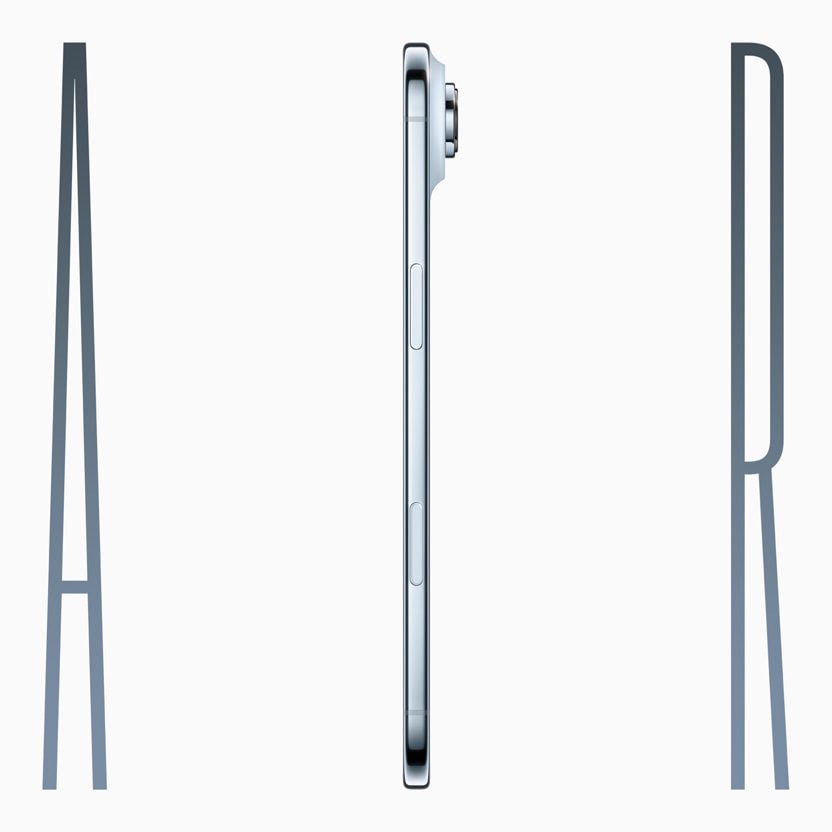
When Steve Jobs introduced the original iPhone, he said, "We’ve designed something wonderful for your hand." And I honestly think that was an understatement.
I remember holding the first iPhone and just saying, wow. Since then, only two models gave me that feeling. The iPhone X eight years ago, and this iPhone Air today.
It is, without a doubt, the most wonderful phone for your hand. So why nobody wants iPhone Air?
Let’s take a closer look, beginning with what makes this device great. And it’s something you have to feel for yourself to truly understand.
You know when you finish bowling and pick up your shoes and they feel weightless? That’s iPhone Air after years of big heavy phones. Holding this in my hand while watching YouTube videos in bed is effortless.
The thinness makes it much easier to grip, instead of having to balance the phone on your fingers. And when it’s in my pocket, I forget it’s even there. That hasn’t happened to me since iPhone 5.

But I’m not sure these things matter to most people. This CNET survey from September 2025 proves it.
Over 2,000 smartphone users were asked what motivates them to upgrade. The top five answers were price, battery life, storage, camera features, and screen size. The least common reasons for upgrading were AI features, phone color, phone thinness, and switching ecosystems.
That means iPhone Air’s biggest selling point, its super thin design, likely only appeals to about 7% of customers. And based on its sales performance so far, that number appears to be accurate.
The model was readily available on pre-order day, while all iPhone 17 Pro Max configurations showed delays of one week or more within the first hour. The next day, iPhone 17 and 17 Pro began to sell out of certain configurations, with most being sold out within a week. But iPhone Air remained available for launch day delivery the entire time.
Apple doesn’t release specific sales numbers for their products anymore, so it’s hard to tell how each iPhone model is performing. But what we do know is that production for every single iPhone 17 model has been increased due to their popularity, except for iPhone Air, whose production Apple has allegedly cut by 1 million units.
We can also extrapolate data from accessory sales. Luckily, Marques Brownlee shared the sales distribution of dbrands iPhone 17 cases, 56.5% of which were purchased by 17 Pro Max users. With the 17 Pro in second place with 31.5%, third was iPhone 17 with 7.3%, and in last place was iPhone Air with 5% of case sales.
Clearly, demand for this model is low, and it’s because the one thing iPhone Air is supposed to do well, being thin, is kind of a lie.
Just look at Apple’s thin products of the past. iPod Nano and iPhone 6 were both 6.9 millimeters. Apple says iPhone Air is 5.6 millimeters, which it is at its thinnest point, but at its thickest it’s 11.28 millimeters. That would make iPhone Air the 7th thickest model ever, behind the 17 and 14 Pro Max.
The original MacBook Air also had a thick and thin point, tapering from 0.76 to 0.16 inches. The difference is, Apple included both measurements on MacBook Air’s specifications page. They didn’t do that for iPhone Air.
And if you’re saying, well, Apple has never included the camera bump when measuring iPhone’s thickness, I’d argue it’s no longer a camera bump, it’s now a plateau. If Apple’s going to put these big, thick sections on the back of their phones, they’d better be honest about their sizes.
Because the plateau on iPhone Air is twice as big as the 17, with half the cameras. At this point, it’s more phone than camera bump, so it should be measured as part of the phone’s thickness, especially since it can cause issues you may not even consider. Like with wireless charging mats. The one in my car doesn’t power iPhone Air, because the plateau sticks out so far that the back of the phone doesn’t make contact with the charger.
If you use Apple’s bumper to protect iPhone Air, you may be surprised to see how far the camera sticks out beyond the bumper itself, leaving the camera vulnerable to impacts. But let’s say you go with the clear case to get full protection. Look at how much bigger that makes the entire plateau.
If that protrusion wasn’t noticeable in your pocket before, it probably will be with the case. I don’t think it’s a problem that Apple included the plateau on iPhone Air. The problem is they’re not being honest about it.
Tell me how thick it actually is, and show me how far it’ll protrude with a full-sized case instead of showing a photo at a very generous angle. Maybe most people aren’t bothered by the large plateau, but it does help prove my next point.
That iPhone Air isn’t really the best at anything. Sure, it has the thinnest body, but also has an annoyingly large plateau instead of a modest camera bump like iPhone 17.

While the iPhone Air is technically the lightest, it only has the 16E beat by 2 grams, which makes it about 1% lighter, and it’s only about 6% lighter than the iPhone 17, a difference most users won’t even notice. While the iPhone Air’s display is just 3% larger than the iPhone 17, again, not a big difference.
The battery inside iPhone Air is bigger than people expected at 3,149 mAh, but it’s still significantly smaller than every other model, with 3 hours less offline video playback compared to the 17, and 6 hours less than the 17 Pro. Which is why Apple’s selling a MagSafe battery pack for it, but not any other model.
When used together, iPhone Air gets 40 hours of video playback, but this is a $100 accessory and has some disappointing limitations. Apple’s battery pack only works with iPhone Air. It charges at 12 watts, and it has about a 3,000 mAh capacity.
This is disappointing, especially when compared to other accessories like the Anker Nano, which is nearly half the price.
Now let’s talk about the A19 Pro chip in iPhone Air. Yes, it’s faster than the A19, but it’s binned, with 5 GPU cores instead of 6.
That means the A19 Pro chip on iPhone Air has 10-15% less graphics performance than the same chip inside the A17 Pro models. And because it doesn’t have their vapor chamber cooling system, the Air will overheat faster and throttle performance sooner.
Apple also talked about their new C1X modem that’s exclusive to iPhone Air, but what they didn’t mention is that it doesn’t achieve the same wireless speeds as the Qualcomm modems in the A17 and A17 Pro, and it doesn’t even support MMWave 5G. Had to see when X modem prioritizes efficiency, using 30% less power than the Qualcomm X71 modem used in the previous 16 Pro.
But where iPhone Air really comes up short is with the camera. It’s using the same lens as Apple’s cheapest phone, the 16E, which costs $600. iPhone Air, on the other hand, is $1000.
That makes it the most expensive model ever to have just one camera lens. With the previous record set by iPhone XR in 2018, which was $750.
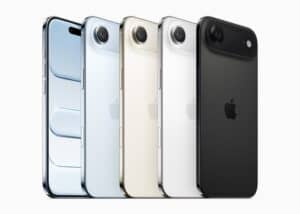
And that leads me to my next point, which is iPhone Air is overpriced. Consider that last year, $1000 bought you the 16 Pro, compared to iPhone Air that was technically a better value for the average user.
iPhone 16 Pro had a battery that was 13% bigger, three camera lenses that enabled far more camera features, USB 3 support, faster wireless charging, adaptive True Tone flash, a LiDAR scanner, stereo speakers, four microphones, and MMWave 5G support.
Compared to iPhone 16 Pro, iPhone Air does have advantages. Like its 18 megapixel selfie camera, A19 Pro chip, slightly larger screen, and double the storage space. But I think most people would prefer the extra functionality of 16 Pro.
Consider the iPhone 16 Plus, it cost $900 a year ago, $100 less than iPhone Air today, but had a bigger screen, bigger battery, and an ultra-wide camera. That means, for four out of the top five most important features for users, the 16 Plus does better than the Air.
Let’s say someone’s shopping for a new iPhone model. First there’s the most affordable iPhone 17, it’s $800, 20% less than the Air, but actually has more features.
More battery life, faster charging, two speakers for stereo sound, a wide angle camera with macro mode, spatial photos and video, and cinematic mode recording. So it would be a mistake for anyone on a budget to choose iPhone Air.
But what about the 17 Pro? Well spending just $100 more would get them a vapor chamber cooling system for better thermals and performance, a chip with six GPU cores instead of five, better battery life, faster charging, two speakers, a dramatically improved camera system with an ultra-wide and telephoto lens, 8x optical zoom, macro mode, spatial photos and video, 4K recording at 120fps, Pro-Raw, Pro-Res RAW, Apple Log 2, GenLock support, cinematic mode, a four microphone array, a LiDAR scanner, adaptive True Tone flash, USB 3 support for 20x faster transfer speeds, and a Qualcomm X80 modem for faster download speeds.
When you look at it this way, it’s easy to understand why iPhone Air is not popular among the vast majority of customers.
Which may cause you to ask, then why did Apple make it? And I think the parallels between this phone and the original MacBook Air offers an explanation.
Back in 2008, the MacBook Air was a completely different type of product than it is today. It was one of Apple’s most expensive laptops, with a starting price of $1,800, $700 more than the entry-level MacBook.
And all that extra money actually got you less. Yes, less thickness and less weight, but also less battery, less storage, less performance, less ports, less speakers, and less thermal capacity. And just like iPhone Air, MacBook Air also received a lot of criticism.
Because who in their right mind would pay substantially more for less features and functionality? And they were right, at that moment in time.
But the tech industry changes fast, and what might be expensive today can become affordable after just a few years. Steve Jobs later called it, quote, the future of notebooks. And judging by the market today, he was absolutely right.
Despite its compromises, the original Air laid the foundation for modern laptops. It was one of the first to feature a unibody design, a solid state drive, no optical drive, dramatically fewer ports, and a multi-touch gesture trackpad. All things that are standard on laptops today.
Similarly, iPhone Air debuted some unique features that I think will be included on all models eventually. Like its metal-can battery that helps strengthen the phone without extra reinforcement, or its 3D-printed USB-C port that’s thinner, stronger, and uses 33% less material. And Apple’s power-efficient C1X modem that may not be the fastest today, but likely will be in the future.
It took just two years for the MacBook Air to go from being one of Apple’s most expensive laptops to their most affordable. And within three years, it became the company’s best-selling model.
I’m not sure it’ll happen that quickly with iPhone Air, but I do think we’ll see it stick around for much longer than iPhone Mini, and enjoy a growing user base if it becomes more affordable with less compromises.