





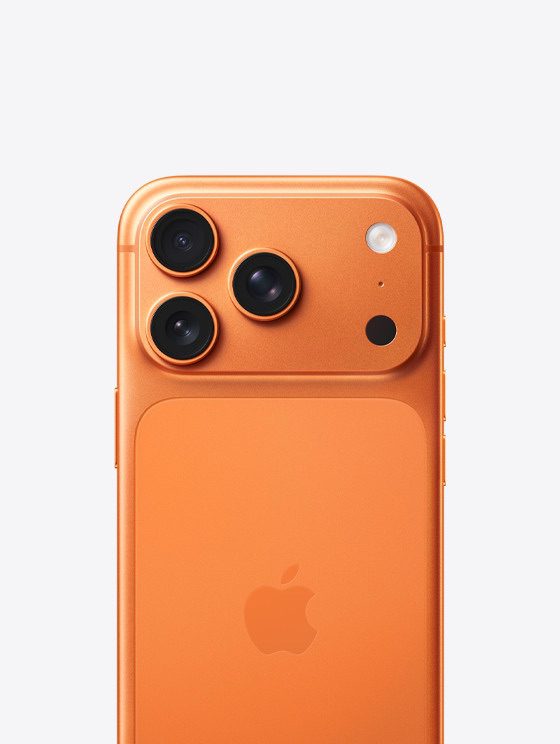
Apple’s iPhone 17 Pro models are selling very well, possibly better than any Pro model before, and there are good reasons why.
Its cameras are fantastic, the battery life is better than ever, and they have double the storage space compared to last year.
But in the midst of all this excitement, I can’t help but point out a few disadvantages of iPhone 17 Pro that I don’t think are getting enough attention.

The first iPhone 17 Pro complaint is the price increase.
Eight years ago in 2017, iPhone X was the first model with a $1,000 price tag, and it earned Apple quite a bit of backlash, because at that time, customers were used to paying $650 to $770 for flagship iPhones, while the budget model iPhone SE cost just $400.
That put the average price of an iPhone at $606.
While the X was very expensive in comparison, it still sold well, and I think that gave Apple the confidence to continue pushing iPhones’ price higher.
In 2018, they charged $100 more for the XS Max, and in 2022, they raised iPhone SE’s price to $430.
In 2023, they raised the 15 Pro Max price to $1,200.
In early 2025, they replaced the SE with the 16E, which was $170 more expensive.
And now the iPhone 17 Pro is $100 more, at $1,100.
As a result, the average price of an iPhone has gone from $606 in early 2017 to $940 today.
This makes the $1,000 iPhone X look like a deal in retrospect.
The drawback is, we’re paying more this year with the iPhone 17 Pro, while getting less in return.
Just compare the iPhone 16 to the 16 Pro. For $200 more, the Pro got you a bigger screen, a higher refresh rate, always-on functionality, five additional hours of offline video playback, and a titanium frame.
This year, 17 Pro lost all those advantages over the base iPhone 17.
It’s made of the same aluminum material, its screen is the same size, with the same functionality, and it only has three additional hours of offline video playback, with a price that’s $300 more than the base model.

If there is one big disadvantage of the iPhone 17 Pro is the aluminum material.
I’ve written about it before, but I’m just as shocked today that Apple raised the price of the Pro by $100 while making it out of cheaper material.
But my frustration with this goes beyond Apple’s greed.
Think about the practical effect of aluminum for the average user.
Most people who use the priciest Pro models tend to stick with that iPhone when upgrading.
For the last eight years, Apple’s most expensive iPhones were made from either stainless steel or titanium.
That means people who switched to iPhone or bought their first smartphone during that period may never have even held an aluminum iPhone before.
I mean, I haven’t used one since 2016 with the iPhone 7.
After nine years, I’ve become accustomed to the characteristics of steel and titanium, which are significantly harder, stronger, and grippier.
This is actually the first time I’ve had to put a case on a Pro iPhone because of how slippery it is.
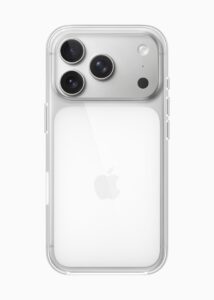
Since the aluminum covers most of the back, it feels like I’m holding an iPhone 6 or 7 again, which people often said felt like bars of soap because of how slippery they were.
That means this thing will be falling out of hands, pockets, and bags more than previous models, and when it is inevitably dropped, it’s more likely to be damaged since aluminum is less durable.
We’ve already seen this happening, with 17 Pro users complaining about scratches, scuffs, and dents that they’d never experienced with previous models.
The camera bump or plateau is especially vulnerable to damage, since its sharp 90-degree edge prevents the anodized aluminum layer from adhering properly, a problem iPhones have never had since modern camera bumps have only ever been made of steel or glass.
There’s also a new issue becoming fairly widespread with the Cosmic Orange 17 Pro. Apparently, its bright saturated color is fading over time to a lighter rose gold hue.
Affected users have had their units replaced by Apple, but they haven’t announced an official recall or replacement program.

It was sort of clever for Apple to switch to aluminum the same year they began including vapor chamber cooling, because it allowed them to brag about the device’s thermal improvements without anyone being able to measure how much of it could be attributed to the aluminum and how much could be attributed to the vapor chamber.
If Apple had switched to aluminum last year, then added the new cooling system this year, it’d be easy to tell if the material actually provided noticeable thermal improvements.
My suspicion is that the aluminum doesn’t actually make a practical difference at keeping the device cooler.
Because in devices like smartphones, the biggest factor that influences thermals is spreading heat quickly across the device to prevent the chip from overheating.
The final step of dissipating heat into the air isn’t nearly as important.
That’s why we can put cases on phones and they don’t immediately overheat.
And there are tests to back this up. iPhone 8 and 10 used the same A11 chip, were just about the same size, and had glass on the front and back.
The only difference that would affect thermal performance were their frames. iPhone 8 was made of aluminum, while the 10 was stainless steel.
Imagine if Apple had made a similar claim about these models as they are today.
The iPhone 8’s aluminum technically had ten times better thermal conductivity, but Apple never mentioned this.
Likely because they didn’t need to justify using aluminum on a base model iPhone, but more importantly, probably because it made virtually no difference anyway.
When doing the same graphic intensive task, iPhone 10 reached 45 degrees, while iPhone 8 reached 44 degrees.
That’s a 2% improvement.
It would have looked silly if Apple advertised iPhone 8’s ten times better conductivity, only for reviewers to call them out on how little difference it made in practice.
But again, Apple could do that with the 17 Pro, because the vapor chamber obfuscates the aluminum’s thermal effect.
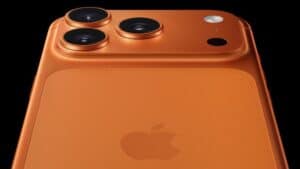
Now let’s talk about the most common complaint about iPhone 17 Pro, its design.
The camera bump is about 80% larger than last year and is widely considered an eyesore, especially since it doesn’t have any additional camera lenses or functionality.
The reason why Apple did it was to make room for a larger battery, and I’m okay with that since the Pro and Pro Max models are meant to prioritize functionality over form.
But I do have an issue with the marketing side of it.
Apple themselves are not calling this a camera bump anymore.
This year it’s officially a plateau, likely because most of its surface area is blank space, whereas last year it was mostly covered with camera components.
And I am okay with calling it a plateau, but Apple wants to have their cake and eat it too.
Because while they’re making the camera bump so big that it’s no longer a bump, they aren’t including the plateau in the phone’s dimensions.
On 17 Pro’s specifications page, its depth is listed as 8.75 millimeters, while the back of the device isn’t even pictured.
Because including the plateau, 17 Pro is actually 13.18 millimeters.
That’s an additional 50% of thickness that Apple doesn’t mention anywhere.
Even when you click on the little number two disclaimer, it just says size and weight vary by configuration and manufacturing process.
Which is kind of odd.
They include a disclaimer about slight variations in weight, but fail to mention the huge bump on the back that adds 4.5 millimeters of thickness to the phone.
I already discussed this on another article, but the original MacBook Air also had a thickened thin point, and Apple included both measurements on its specs page.
I don’t know how they’re able to get away with leaving it out on iPhone 17 Pro, but I hope they start making that clear.

Another design element bothering people is the 17 Pro’s glass rectangle.
The only other time they did something like this was with iPhone 5, and by extension the 5S and SE, since they borrowed the design.
But that approach was more seamless, symmetrical, and sensible, because there were practical reasons for it.
Wireless signals can’t pass through metal, so the glass sections allowed for that.
And back then, the glass used on iPhones were significantly thicker and heavier.
So replacing as much of it as they could with aluminum saved on weight.
That’s a big reason why iPhone 5 weighed about 20% less than the 4S, which had an all-glass back.
But today, the ceramic shield glass used on iPhones is much lighter, and actually about the same weight as aluminum.
And we already proved the alleged thermal benefits of aluminum are highly overstated.
So the only reason I can think of that Apple covered the plateau in aluminum instead of glass like every other year is if its unibody design allowed Apple to use less parts.
Because there are downsides to doing this.
Like the MM Wave antenna window on the top of US models, or the extensive antenna lines that now wrap around the plateau.
Previously, these cutouts weren’t necessary, because the back glass allowed all those wireless signals to pass through.
It also made the glass rectangle necessary, because covering the entire back in aluminum would block MagSafe and wireless charging.
If Apple had just made the entire back panel out of glass, like before, it would have solved all these issues.
Plus, the logo would be centered with the device, instead of the glass rectangle.
Which means we could use the old clear case designs instead of the new ones with cheap looking white plastic rectangles.
And the frame wouldn’t need an antenna window on top, the back panel would look more seamless, and the plateau would be made from a durable ceramic shield rather than soft anodized aluminum.
While I am currently using the 17 Pro as my main phone, and it has great camera features and battery life, I am becoming concerned about Apple making us pay more for devices that almost certainly cost them less to make.
It’s caused me to seriously explore other smartphone options, and I will be write an article about that in the coming weeks, so be sure to come back for that.
But for now, those are the main cons of the iPhone 17 Pro. Thanks for reading till the end.