


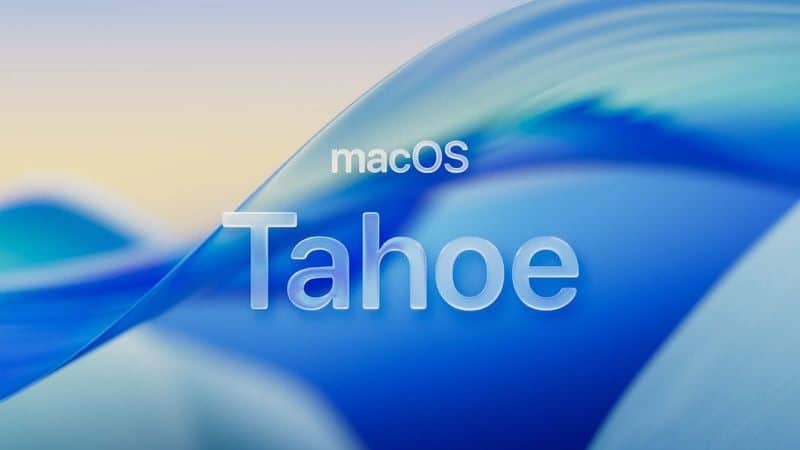
After updating to macOS 26 Tahoe, some Mac users report that TVs connected over HDMI (directly or through an A/V receiver or USB-C hub) no longer work as external displays. In many cases, the TV is detected by macOS (you’ll see the device name), but it shows No Signal, forces mirroring with no way to disable it, or simply doesn’t appear under Displays at all. Audio can still pass through in some setups, but there’s no video.
You can connect a Mac to a TV using HDMI.
Below is a summary of what macOS Tahoe users are seeing and a practical set of workarounds you can try–ordered from simplest to more advanced.
The issue:
- Affected Macs include Apple silicon models (M1/M4) on macOS 26.0–26.0.1.
- TVs from various brands (Vizio, LG, Samsung, Grundig) fail to show video even though macOS "sees" them.
- Going through an A/V receiver is frequently impacted (audio works, video does not).
- USB-C > HDMI adapters/cables don’t consistently fix it; some users say it made no difference.
- AirPlay/Screen Mirroring to the TV works as a stopgap, but it’s laggy and colors look washed-out.
- A few users report partial success after unplugging/re-plugging and dropping refresh rate to 30 Hz.
- One user worked around forced mirroring by using _BetterDisplay_to "treat the TV as a computer monitor"–helpful for them, but not universal.
- Several users say 26.0.1 did not resolve the issue.
Fixing TV as a Display Not Working After macOS 26 (Tahoe):
The fixes below go from basic to advanced — try them in order, and move on to the next one only if the problem isn’t resolved.
- Power sequence reset:
-
Turn off the TV and (if used) the A/V receiver.
-
Unplug the HDMI cable at both ends.
-
Shut down the Mac fully (Apple menu > Shut Down).
-
Power on the TV (and receiver), select the correct HDMI input, then start the Mac.
-
Reconnect HDMI only after the TV input is active.
-
Try a different HDMI port or path:
-
If you’re using an A/V receiver, bypass it: connect the Mac > TV directly to rule out receiver handshakes.
-
If in-wall cables are fixed, try temporarily running a short, known-good cable along the floor for testing.
-
Other notes: Use Certified Ultra High Speed (48 Gbps) HDMI cable, as short as possible, is ideal–especially for 4K HDR. Re-seat it firmly. If you use a USB-C dongle, try a different brand or a direct USB-C > **HDMI **cable. This won’t always fix the macOS bug, but it rules out flaky adapters.
-
See also: What Exactly Is Thunderbolt and How Is It Different From USB-C?
-
Lower refresh rate / resolution:
-
Go to System Settings > Displays > (select the TV) > Advanced / More Options and switch to 30 Hz and/or a lower resolution. Some users regained video this way.
-
Turn off mirroring (if you can see options):
-
System Settings > Displays > and select Extend Display.
-
If macOS keeps forcing mirroring and you can’t change it, jump to the BetterDisplay workaround below.
Workarounds:
-
Force "treat TV as a monitor" (BetterDisplay):
-
If macOS insists on mirroring to the TV or won’t expose the usual display options, utilities like BetterDisplay can present the TV as a "computer monitor," which restored normal extended-display behavior for some users. Results vary–this helped at least one user, while others saw no change.
-
Delete WindowServer display prefs (advanced):
-
Rebuild display preferences by running the following code in Terminal:
-
sudo rm /Library/Preferences/com.apple.windowserver.displays.plist -
Then shut down the Mac, wait 20–30 seconds, and boot normally before reconnecting the TV.
-
Note & warning:
- This resets system-level display mappings. You may need to re-arrange displays afterward.
- Safe Mode test:
-
Booting in Safe Mode can clear caches and isolate third-party kexts/extensions. If the TV works in Safe Mode but not normal mode, a login item or extension may be involved. Exit Safe Mode and test again. Follow the steps in this article to boot into Safe Mode.
If you’re using an A/V receiver
- Test Mac > TV (direct). If that restores video, the issue is likely EDID/handshake through the receiver on Tahoe.
- On the receiver: toggle HDMI Control / CEC, 4K mode / HDMI signal format (Standard vs Enhanced), or try a different HDMI input.
- Consider setting the TV input’s HDMI Ultra HD Deep Color (or similar) off, then back on.
See also: Fix Audio Crackling, Pops, or Drop-Outs on Mac After Updating to macOS Tahoe (26)


:)