


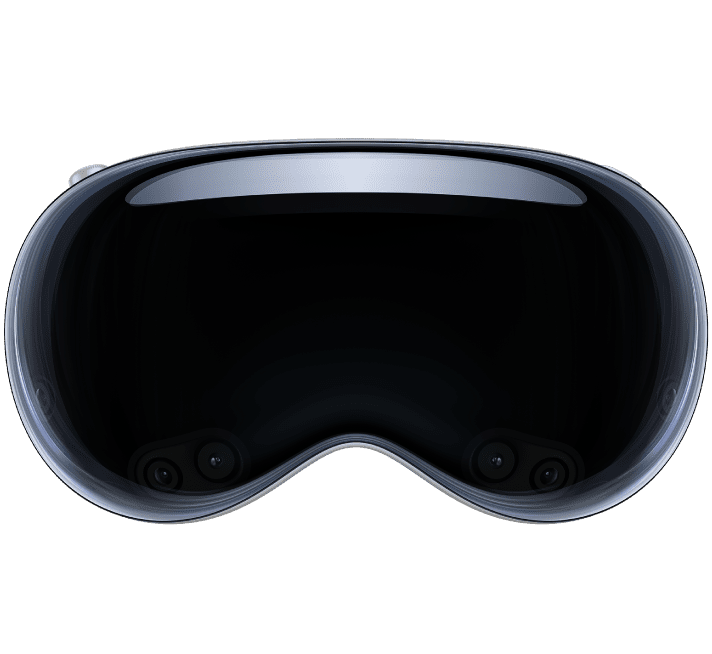
The Apple Vision Pro is a $3,500 spatial computing headset. Which compared to other augmented reality or AR products, is quite expensive. So why do they charge so much? Well it’s mainly due to the product’s unique technology and component costs.
Not all headsets offer the same functionality and experience. There are differences in display quality, resolution, contrast, processing speeds, latency, and more. The Vision Pro delivers incredible specs without compromising on size or design. Which is made possible by years of technological development and high costs of industry leading hardware.
Just consider the iPhone. It took Apple about two and a half years to develop, with over 200 patents on new technology. Vision Pro on the other hand, took six to seven years to develop, with over 5,000 patents that date back to 2007. So calling it Apple’s most ambitious product ever is an understatement.
But what exactly are those expensive technologies? Well the displays themselves are the most advanced in any consumer headset today. Instead of using LCD or mini-LED panels, Apple worked with Sony to create first of their kind micro-OLED displays with pixels as small as a human red blood cell. Without this display technology, Vision Pro wouldn’t be able to deliver a true to life viewing experience.
Your field of view through Vision Pro exactly matches what you see through your eyes without it. What you see in front of your face is captured with such precision that it delivers a convincing simulation of natural vision, with a slight tint and a subtle flattering quality to the image.
And that’s something you rarely hear about AR headsets, which can cause motion sickness and disorientation due to appearing similar to real life, but not exactly. Achieving this experience not only required expensive micro-OLED displays, but also expensive cameras to capture the world around you in high fidelity, then a completely new processor called R1 to instantly stream new images to your eyes within 12 milliseconds, eight times faster than the blink of an eye. This allows for a true to life experience without any perceived latency or distortion.
But perhaps the biggest difference between Vision Pro and existing AR headsets is the input. Typically, physical controllers are held in each hand to interact with content. But Apple went a different direction. They opted for precise eye and hand tracking. This means interactions feel more natural, and keeps your hands free while using Vision Pro. But it comes at a cost. Apple had to use four eye tracking cameras alongside LED illuminators to track your eye movement. Something other headsets can do, but not as precisely as Vision Pro. Plus through its passthrough camera system, Vision Pro displays your real hands in real time as you interact with digital content. Whereas most other headsets superimpose virtual hands instead.
But there’s one feature exclusive to Vision Pro that adds to its expense even more. It’s called EyeSight. Where your eyes and expression is displayed in real time on an external screen. This way you can maintain a connection with people around you instead of being isolated in a virtual world. But this isn’t just any screen. It’s the first ever curved lenticular display that shows different perspectives of your face to each person in the room simultaneously.
All these expensive technologies and components result in an AR experience that can’t be matched by any other product today. And Apple thinks customers are willing to pay the $3,500 price to have it.
For more information about Vision Pro’s customizable settings, check out our guide. You can also learn more about iPhone camera features and how spatial video capabilities are expanding across Apple’s ecosystem.